6 Days Rongai Trek
Trekking Overview
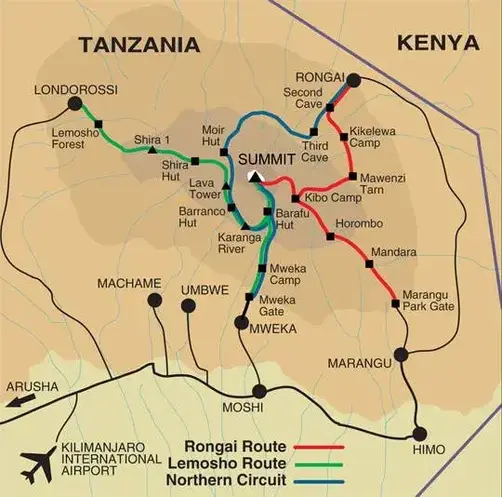
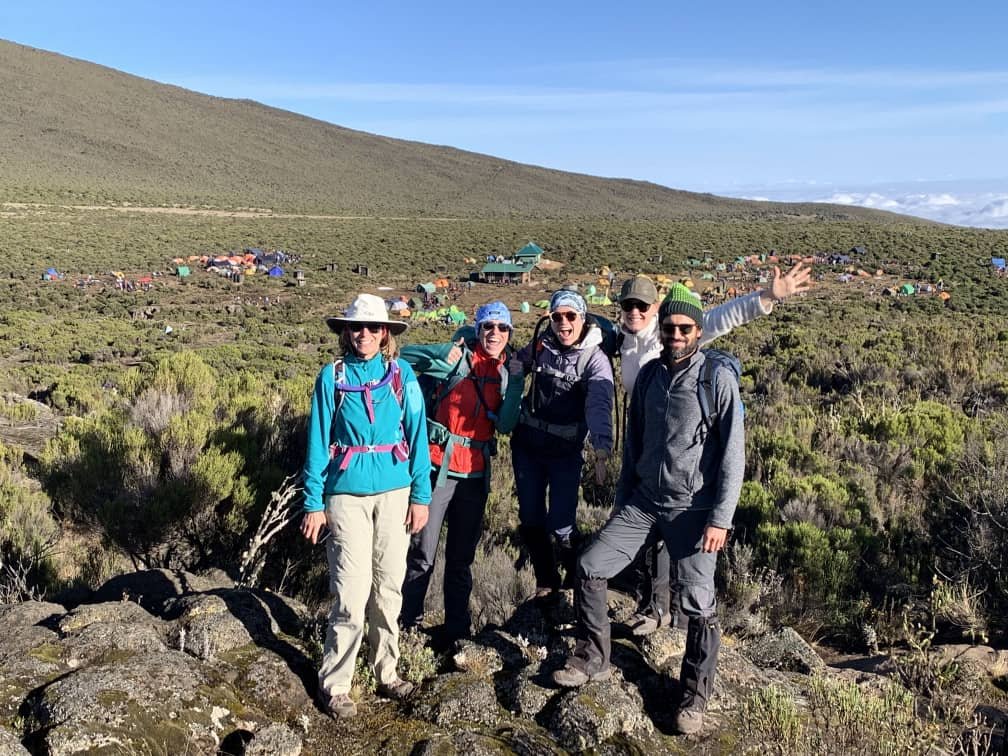
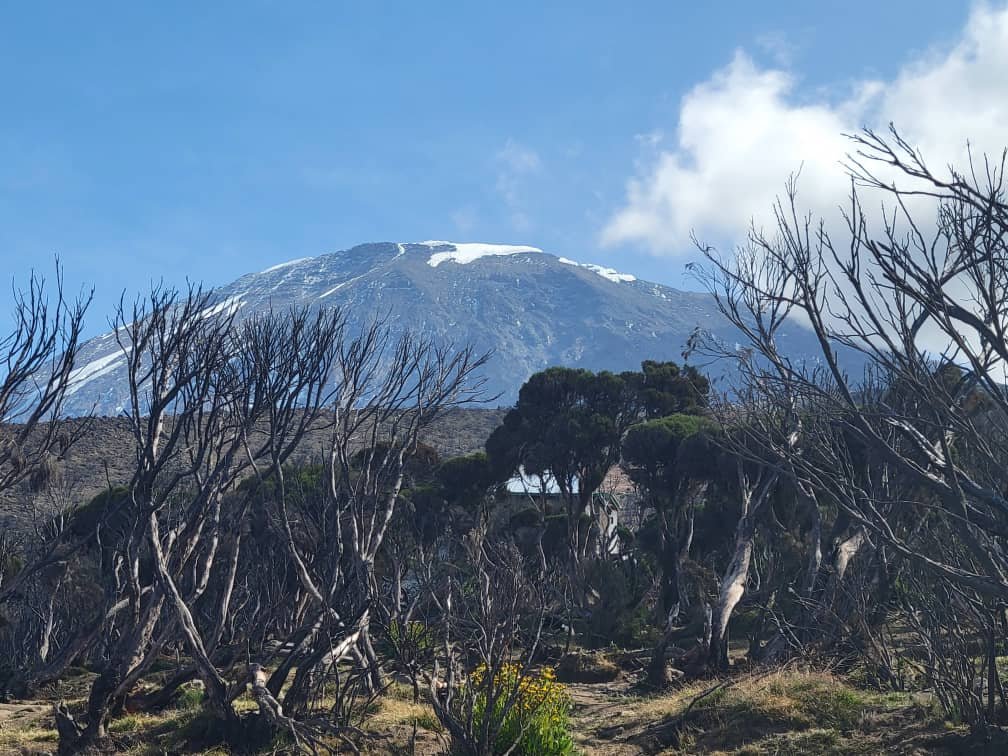
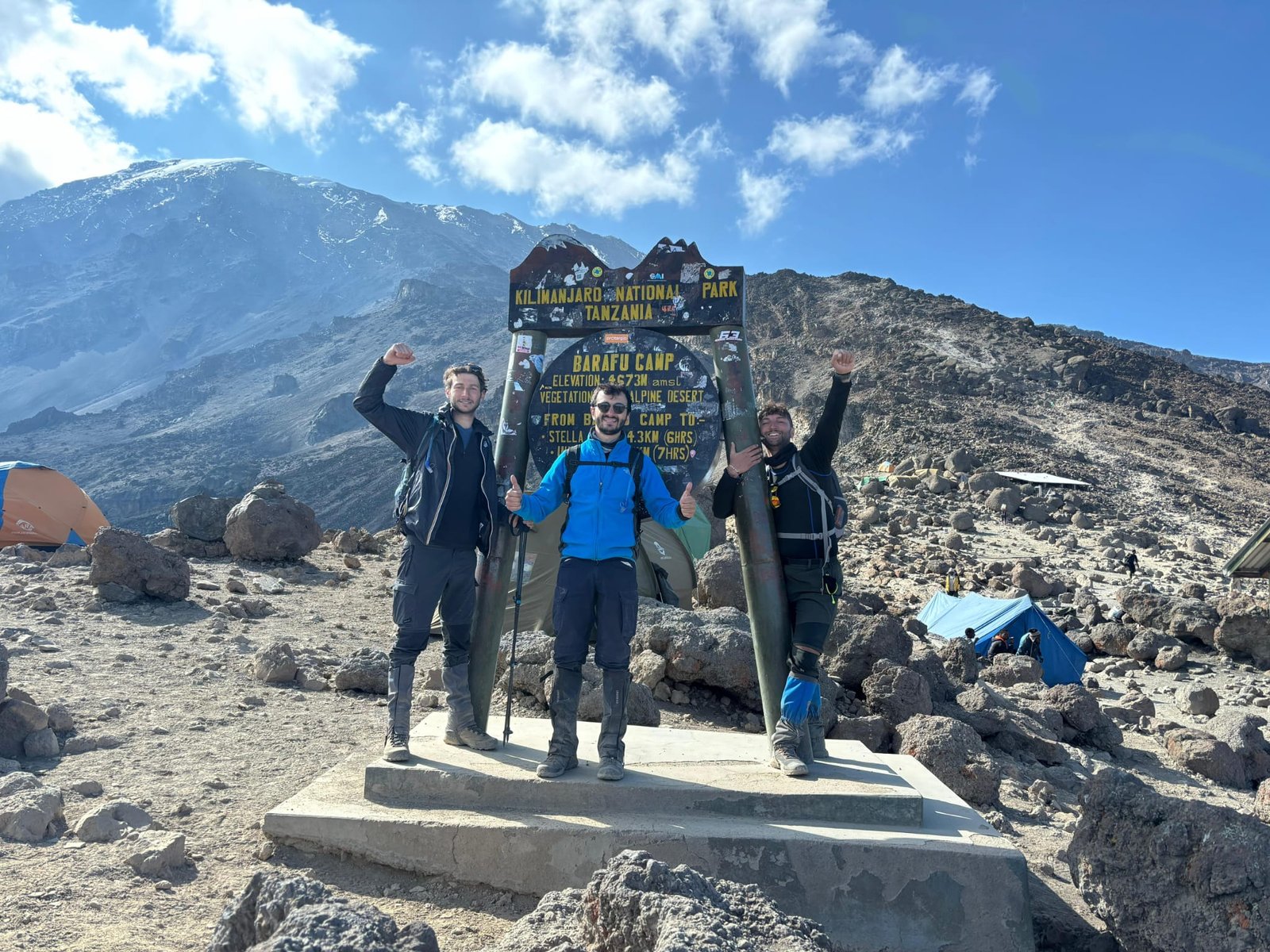
The Rongai Route is the only trail that approaches Mount Kilimanjaro from the northern side, close to the Kenyan border. It is one of the less crowded and drier routes, making it a great option for trekkers looking for a quieter and more remote experience. The 6-day itinerary allows for a gradual ascent, providing better acclimatization while passing through diverse landscapes, including rainforests, moorlands, and alpine deserts.
Trekking Itinerary
Day :1 Rongai Gate (1,950m) to Simba Camp (2,650m)
The journey begins with a scenic drive from Moshi to Rongai Gate, taking about 3–4 hours. After registration at the Kilimanjaro National Park Gate, the trek starts through dense rainforest, home to colobus monkeys and exotic birds. The trail is gently sloping with less mud than other routes. After 3 to 4 hours of hiking, trekkers arrive at Simba Camp (2,650m) on the edge of the moorland zone, where they rest and enjoy their first night on the mountain.- Distance: ~8 km (~5 miles)
- Time: ~4 Hours
- Elevation: 700m (2,297 ft)
- Highlights: Rainforest trek
- Meals: Breakfast, Lunch & Dinner
Day 2: Simba Camp (2,650m) to Second Cave Camp (3,450m)
After breakfast, the trek continues with a steady ascent into the moorland zone. The vegetation becomes shorter and sparser, revealing panoramic views of the Kenyan plains. The route passes through rocky landscapes, and the temperature begins to drop. After 3 to 4 hours of trekking, climbers arrive at Second Cave Camp (3,450m), where they have lunch and spend the rest of the day acclimatizing.- Distance: ~7 km (~4.3 miles)
- Time: ~9 Hours
- Elevation: 800m (2,625 ft)
- Highlights: Moorland
- Meals: Breakfast, Lunch & Dinner
Day 3: Second Cave Camp (3,450m) to Kikelewa Camp (3,600m)
This day involves a short but steep climb as the trail winds through rocky outcrops and scattered giant lobelias. The landscape starts transitioning into alpine desert, with breathtaking views of the mountain peaks. After 3 to 4 hours of trekking, hikers reach Kikelewa Camp (3,600m), a beautiful valley campsite surrounded by towering peaks. This afternoon is spent resting and preparing for higher altitudes.- Distance: ~5 km (~3.1 mi)
- Time: ~4 Hours
- Elevation: 150m (492 ft)
- Highlights: Moorland trek
- Meals: Breakfast, Lunch & Dinner
Day 4: Kikelewa Camp (3,600m) to Mawenzi Tarn Camp (4,330m)
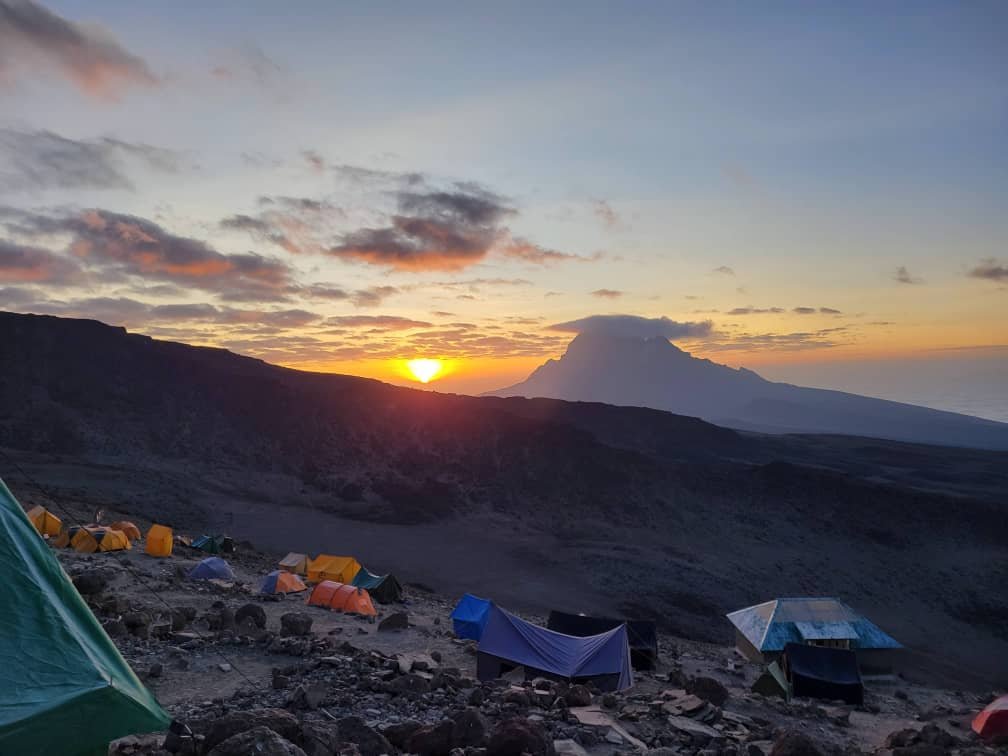
The trek continues steeply upward into the alpine desert zone, where vegetation becomes scarce and temperatures drop significantly. This is an important acclimatization day, allowing trekkers to adjust to the altitude before the summit push. After reaching Mawenzi Tarn Camp (4,330m), hikers enjoy spectacular views of Mawenzi Peak, one of Kilimanjaro’s three volcanic cones.- Distance: ~6 km (~3.7 miles)
- Time: ~7 Hours
- Elevation: 730m (2,395 ft)
- Highlights: Alpine Desert Trek
- Meals: Breakfast, Lunch & Dinner
Day 5: Mawenzi Tarn Camp (4,330m) to Kibo Hut (4,700m) to Uhuru Peak (5,895m) to Horombo Camp (3,720m)
The summit attempt begins just after midnight. The climb from Kibo Hut (4,700m) to Uhuru Peak (5,895m) is the most challenging part of the trek, as it involves hiking in freezing temperatures over loose scree. Trekkers reach Gilman’s Point (5,685m) before continuing along the crater rim to Uhuru Peak, the highest point in Africa.After celebrating at the summit and taking in the incredible sunrise over the glaciers, hikers descend to Kibo Hut for a short rest, then continue further down to Horombo Camp (3,720m) for the night.
- Distance: 21 km (~13.7 mi)
- Time: 12–15 Hours
- Elevation Gain: 1,565m (5,134 ft)
- Elevation Loss: 2,175m (7,135 ft)
- Highlights: Arctic
- Meals: Breakfast, Lunch & Dinner Included.
Day 6: Horombo Camp (3,720m) to Marangu Gate (1,860m) to Moshi
The final day is a long descent through the heath and moorland, eventually re-entering the rainforest. Trekkers arrive at Marangu Gate (1,860m), where they receive summit certificates before returning to Moshi for a hot shower and a well-earned rest.- Distance: 19 km (11.8 miles)
- Time: ~6 Hours
- Elevation Loss: 1,860m (6,102 ft)
- Highlights: Rainforest descent
- Meals: Breakfast & Lunch.