7 Days Rongai Trek
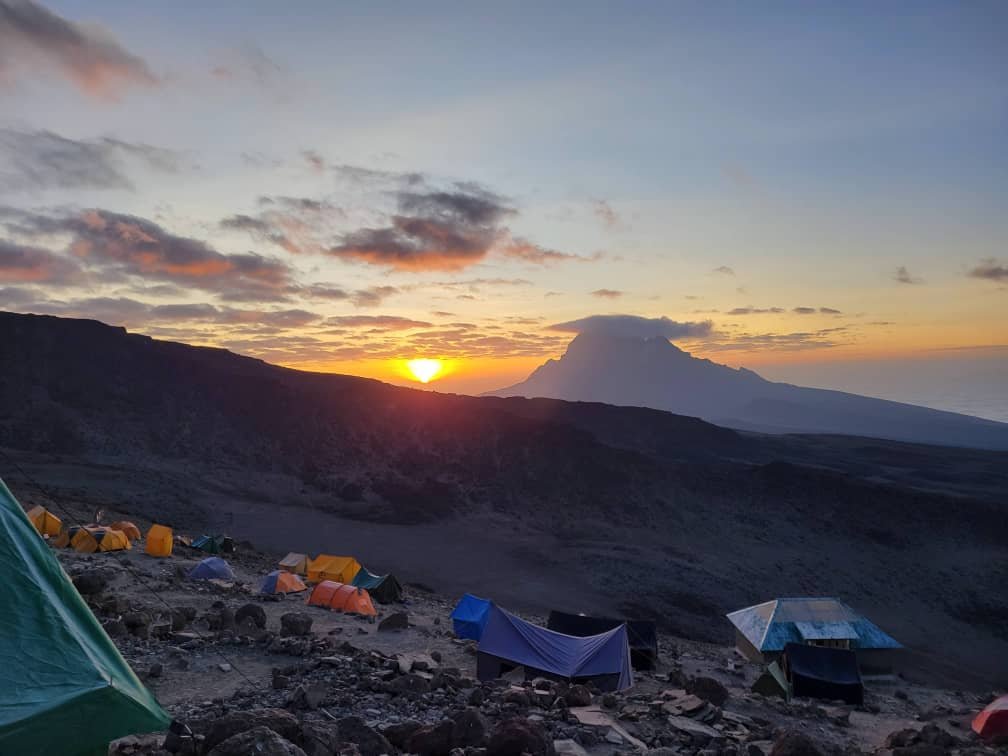
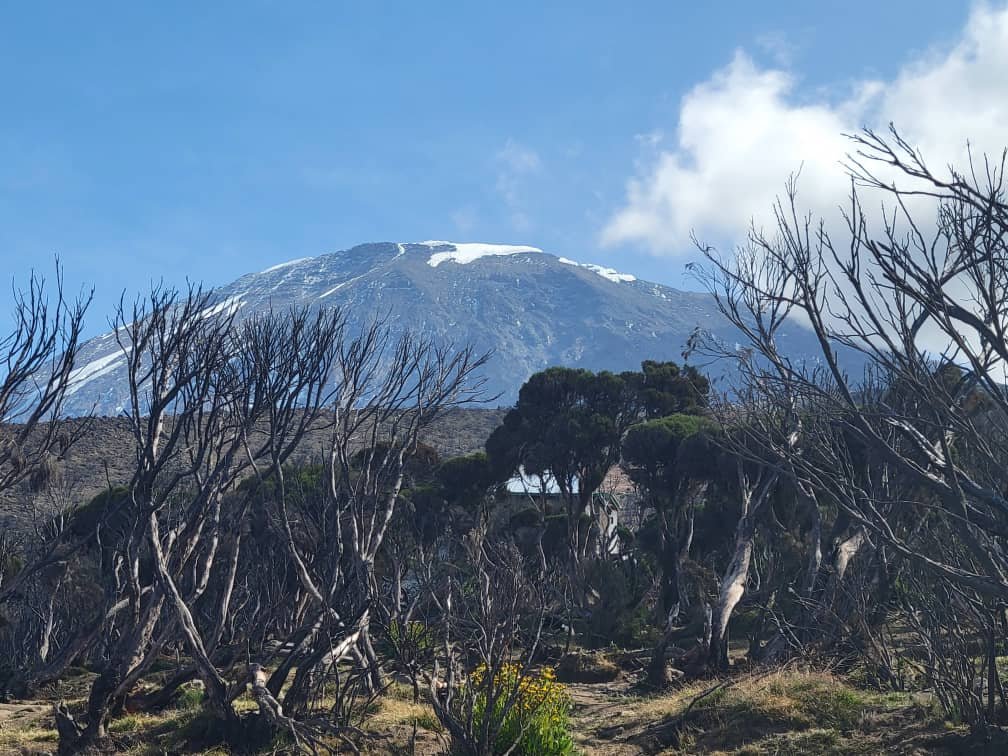
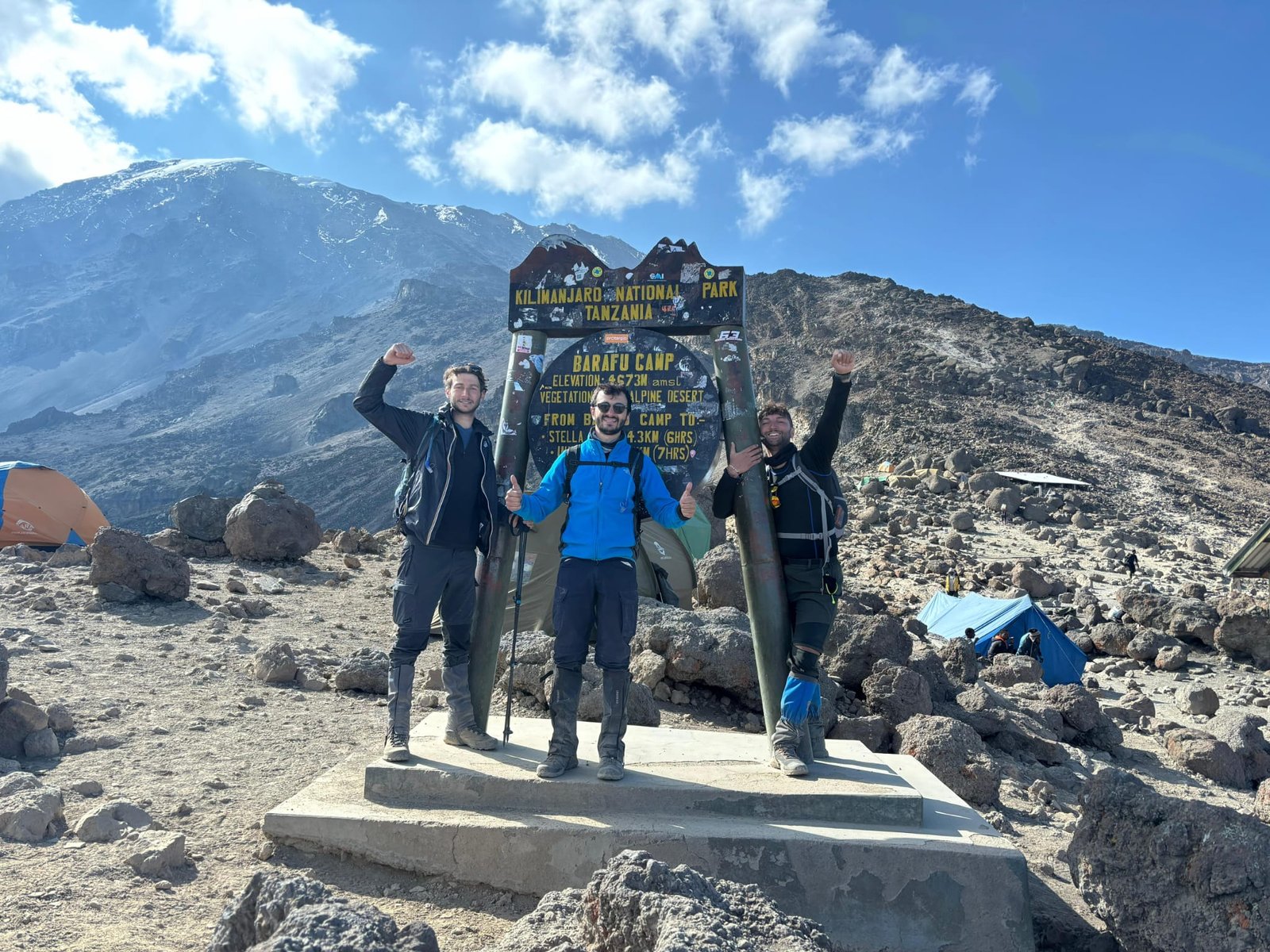
Trekking Overview
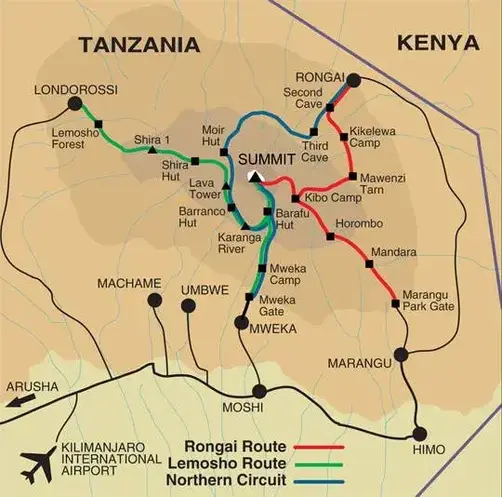
The Rongai Route is the only trail that approaches Mount Kilimanjaro from the northern side, near the Kenyan border. It is a less crowded, scenic, and gradual ascent, making it an excellent choice for trekkers looking for better acclimatization and higher summit success rates. This 7-day itinerary includes an extra acclimatization day at Mawenzi Tarn, which significantly improves the chances of reaching Uhuru Peak (5,895m). The trek passes through diverse landscapes, including rainforests, moorlands, alpine deserts, and glaciers.
Day :1 Rongai Gate (1,950m) to Simba Camp (2,650m)
The adventure begins with a scenic drive from Moshi to Rongai Gate, which takes about 3–4 hours. After registering at the Kilimanjaro National Park, the trek starts through a beautiful rainforest, home to colobus monkeys, birds, and rich vegetation.
The trail ascends gently, providing a less steep start compared to other routes. After 3 to 4 hours, hikers reach Simba Camp (2,650m), located on the edge of the moorland zone, where they enjoy dinner and rest overnight.
- Distance: ~8 km (~5 miles)
- Time: ~4 Hours
- Elevation: 700m (2,297 ft)
- Highlights: Rainforest trek
- Accommodation: Simba Camp (Tents)
- Meals: Lunch & Dinner
Day 2: Simba Camp (2,650m) to Second Cave Camp (3,450m)
After breakfast, the trek continues with a steady ascent into the moorland zone, where vegetation changes to shrubs, giant lobelias, and rocky landscapes. Trekkers will enjoy incredible views of the Kenyan plains while gradually adjusting to the altitude.
After about 3 to 4 hours of hiking, climbers reach Second Cave Camp (3,450m), where they have lunch and spend the afternoon resting to help with acclimatization.
- Distance: ~7 km (~4.3 miles)
- Time: ~9 Hours
- Elevation: 800m (2,625 ft)
- Highlights: Moorland
- Accommodation: Second Cave (Tents)
- Meals: Breakfast, Lunch & Dinner
Day 3: Second Cave Camp (3,450m) to Kikelewa Camp (3,600m)
The trek becomes steeper as the route leads towards Kikelewa Camp, passing through rocky terrain with sparse vegetation. The air is thinner at this point, and climbers may start to feel the effects of altitude.
After 3 to 4 hours, hikers reach Kikelewa Camp (3,600m), which is located in a small, scenic valley surrounded by towering hills. The rest of the afternoon is spent relaxing and acclimatizing before dinner.
- Distance: ~5 km (~3.1 mi)
- Time: ~3–4 Hours
- Elevation: 150m (492 ft)
- Highlights: Moorland trek
- Accommodation: Kikelewa Camp (Tents)
- Meals: Breakfast, Lunch & Dinner
Day 4: Kikelewa Camp (3,600m) to Mawenzi Tarn Camp (4,330m) (Acclimatization Day)
The climb continues with a steep ascent towards Mawenzi Tarn Camp (4,330m), a breathtaking campsite located beneath the dramatic Mawenzi Peak.
This is an important acclimatization day, allowing trekkers to adjust to the altitude before the summit attempt. In the afternoon, hikers take a short hike to higher elevations and return to camp for rest and dinner.
- Distance: ~6 km (~3.7 miles)
- Time: 3–4 Hours
- Elevation Gain: 730m (2,395 ft)
- Highlights: Alpine Desert Trek
- Accommodation: Mawenzi Tarn Camp (Tents)
- Meals: Breakfast, Lunch & Dinner
Day 5: Mawenzi Tarn Camp (4,330m) to Kibo Hut (4,700m)
The trail crosses the saddle between Mawenzi and Kibo, entering the alpine desert zone, where temperatures drop significantly, and vegetation is scarce.
Trekkers reach Kibo Hut (4,700m) by mid-afternoon, where they eat, hydrate, and rest before the midnight summit attempt.
- Distance: 8 km (5 miles)
- Time: 5–6 Hours
- Elevation Gain: 1,565m (5,134 ft)
- Elevation Loss: 2,175m (7,135 ft)
- Highlights: Alpine Desert
- Accommodation: Kibo Hut (Tents)
- Meals: Breakfast, Lunch & Dinner Included.
Day 6: Kibo Hut (4,700m) to Uhuru Peak (5,895m) to Horombo Hut (3,720m)
At midnight, the final push to the summit begins. The climb to Uhuru Peak (5,895m) is the most challenging section, requiring perseverance and mental strength.
Trekkers first reach Gilman’s Point (5,685m), where they take a short break before continuing along the crater rim to Uhuru Peak, the highest point in Africa.
After celebrating the achievement and taking photos, hikers descend to Kibo Hut for a short rest, then continue to Horombo Hut (3,720m) for the night.
- Distance: 21 km (13 miles)
- Time: ~6 Hours
- Elevation Gain: 1,195m (3,921 ft)
- Elevation Loss: 2,175m (7,135 ft)
- Highlights: Arctic
- Accommodation: Horombo Hut (Tents)
- Meals: Breakfast & Lunch.
Day 7: Horombo Hut (3,720m) to Marangu Gate (1,860m) to Moshi
The trail crosses the saddle between Mawenzi and Kibo, entering the alpine desert zone, where temperatures drop significantly, and vegetation is scarce.
Trekkers reach Kibo Hut (4,700m) by mid-afternoon, where they eat, hydrate, and rest before the midnight summit attempt.
- Distance: 19 km (11.8 miles)
- Time: 5–7 Hours
- Elevation Loss: 1,860m (6,102 ft)
- Highlights: Rainforest
- Accommodation: Hotel in Moshi
- Meals: Breakfast & Lunch
Why Choose the Rongai Route(7 Days)?
This 7-day Rongai Route is perfect for climbers seeking a quiet, scenic, and well-paced ascent while maximizing their chances of reaching Uhuru Peak! 🏔️