7 Days Lemosho Trek
Trekking Overview
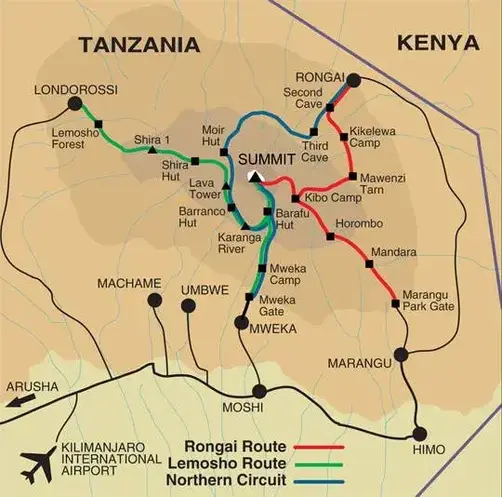
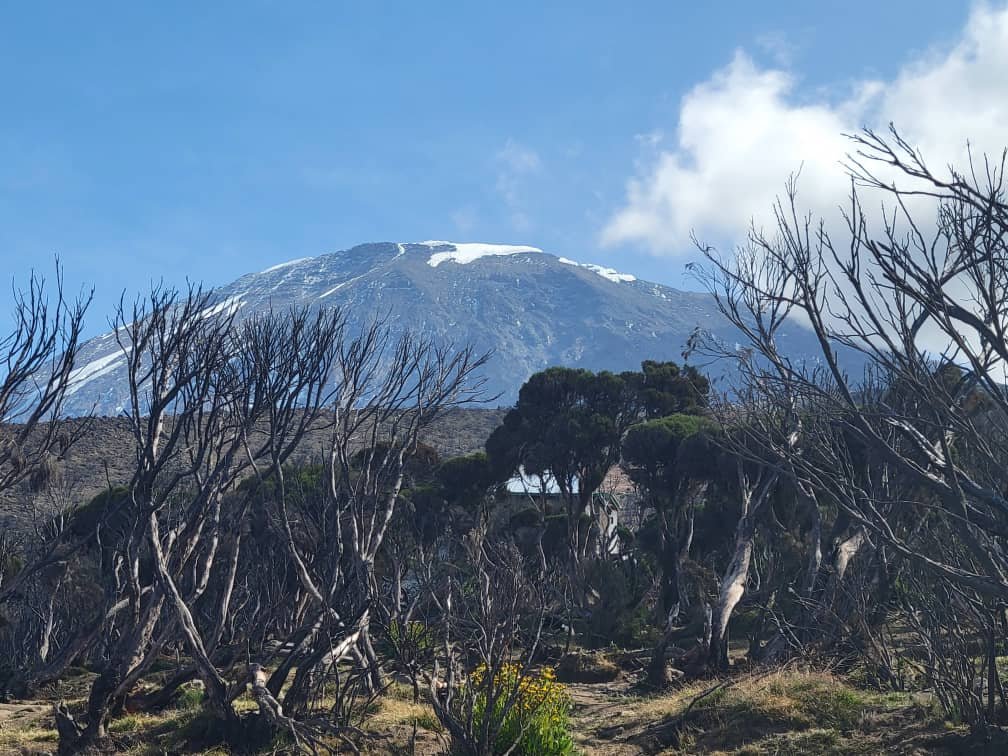
The Lemosho Route is one of the most scenic and successful routes to the summit of Mount Kilimanjaro. It offers stunning landscapes, diverse ecosystems, and excellent acclimatization opportunities, making it a preferred route for climbers. The 7-day version of the trek provides a slightly faster ascent than the 8-day option, but still allows for proper acclimatization, which increases summit success rates. This trek crosses dense rainforests, open moorlands, volcanic ridges, and glaciers, with breathtaking panoramic views throughout.
Day 1: Londorossi Gate (2,100m) to Mti Mkubwa Camp (2,820m)
The trek begins with a drive from Moshi to Londorossi Gate, which takes about 3-4 hours. After registration and permit clearance, a short drive takes trekkers to the Lemosho trailhead.
The hike starts in the lush rainforest, where climbers can spot colobus monkeys, blue monkeys, and a variety of birds. The trail is sometimes muddy and slippery, requiring gaiters and trekking poles.
After 3 to 4 hours of hiking, trekkers arrive at Mti Mkubwa Camp (2,820m) for the first night on the mountain.
- Distance: 6 km (3.7 miles)
- Time: 3–4 Hours
- Elevation Gain: 720m (2,362 ft)
- Highlights: Rainforest trek
- Accommodation: Mti Mkubwa Camp (Tents)
- Meals: Lunch & Dinner
Day 2: Mti Mkubwa Camp (2,820m) to Shira 2 Camp (3,850m)
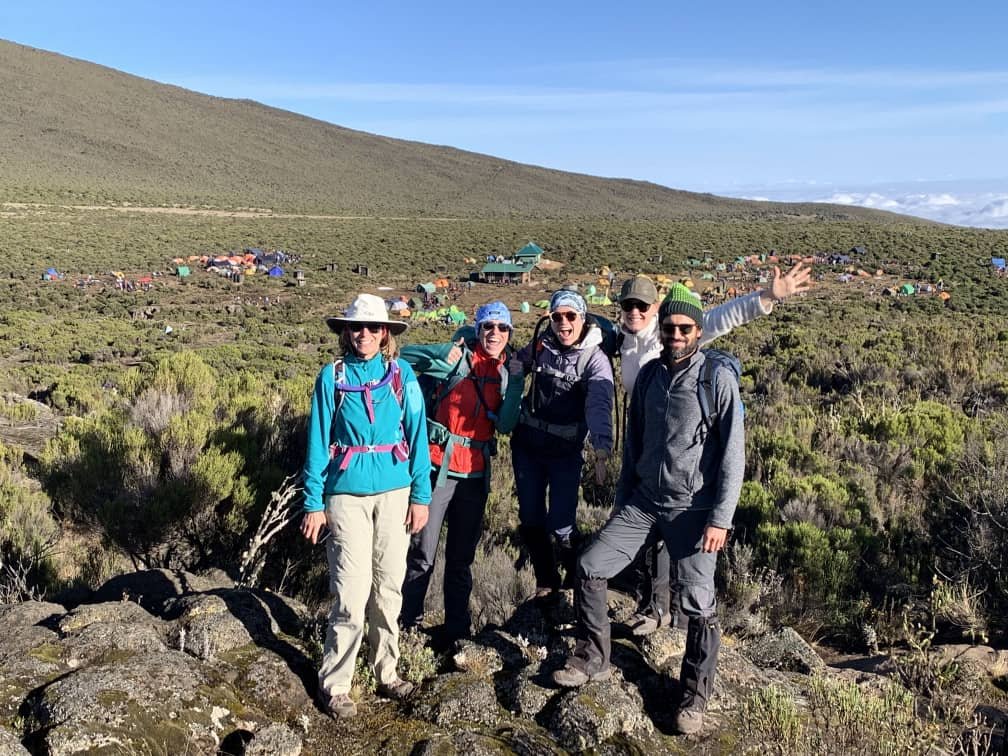
The trek leaves the rainforest behind and enters the heath and moorland zone, where the landscape becomes rockier and drier. The trail passes through the Shira Plateau, one of the largest high-altitude plateaus in the world, offering stunning views of Mount Meru and Kibo Peak.
Trekkers will reach Shira 1 Camp (3,505m) and then continue to Shira 2 Camp (3,850m), where they will spend the night. This longer hike helps with acclimatization, making the next day's altitude gain easier to handle.
- Distance: 16 km (9.9 miles)
- Time: 6–8 Hours
- Elevation Gain: 1,030m (3,379 ft)
- Highlights: Moorland
- Accommodation: Shira 2 Camp (Tents)
- Meals: Breakfast, Lunch & Dinner
Day 3: Shira 2 Camp (3,850m) to Lava Tower (4,630m) to Barranco Camp (3,976m)
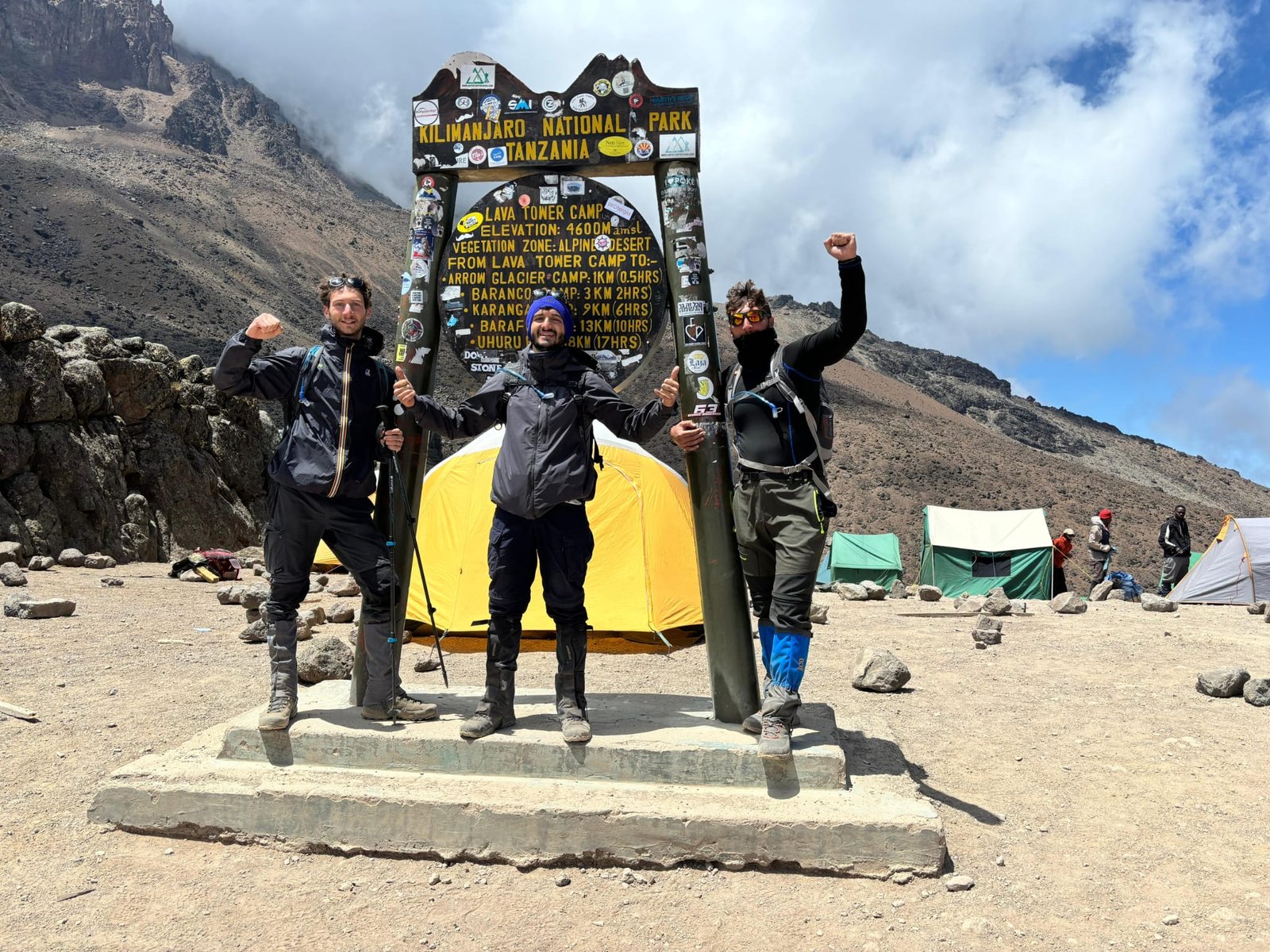
This is an important acclimatization day, following the “climb high, sleep low” technique. The trek ascends to Lava Tower (4,630m), a striking volcanic rock formation, where trekkers stop for lunch and rest.
After Lava Tower, the trail descends to Barranco Camp (3,976m), passing through the "Garden of the Senecios," filled with giant groundsels and lobelias. Although the day ends at a similar elevation as it started, the time spent at high altitude helps the body adjust.
- Distance: 10 km (6.2 miles)
- Time: 6–8 Hours
- Elevation Gain: 780m (2,560 ft)
- Elevation Loss: 654m (2,145 ft)
- Highlights: Semi-Desert
- Accommodation: Barranco Camp (Tents)
- Meals: Breakfast, Lunch & Dinner
Day 4: Barranco Camp (3,976m) to Karanga Camp (4,035m)
The day begins with a challenging ascent up the Barranco Wall, a steep rock face that requires some scrambling but is not technical. At the top of the wall, climbers are rewarded with incredible panoramic views of the valley below.
The trail then descends into the Karanga Valley before reaching Karanga Camp (4,035m), a key acclimatization stop before summit night.
- Distance: 5 km (3.1 miles)
- Time: 4–5 Hours
- Elevation Gain: 59m (194 ft)
- Highlights: Alpine Desert Trek
- Accommodation: Karanga Camp (Tents)
- Meals: Breakfast, Lunch & Dinner
Day 5: Karanga Camp (4,035m) to Barafu Camp (4,673m)
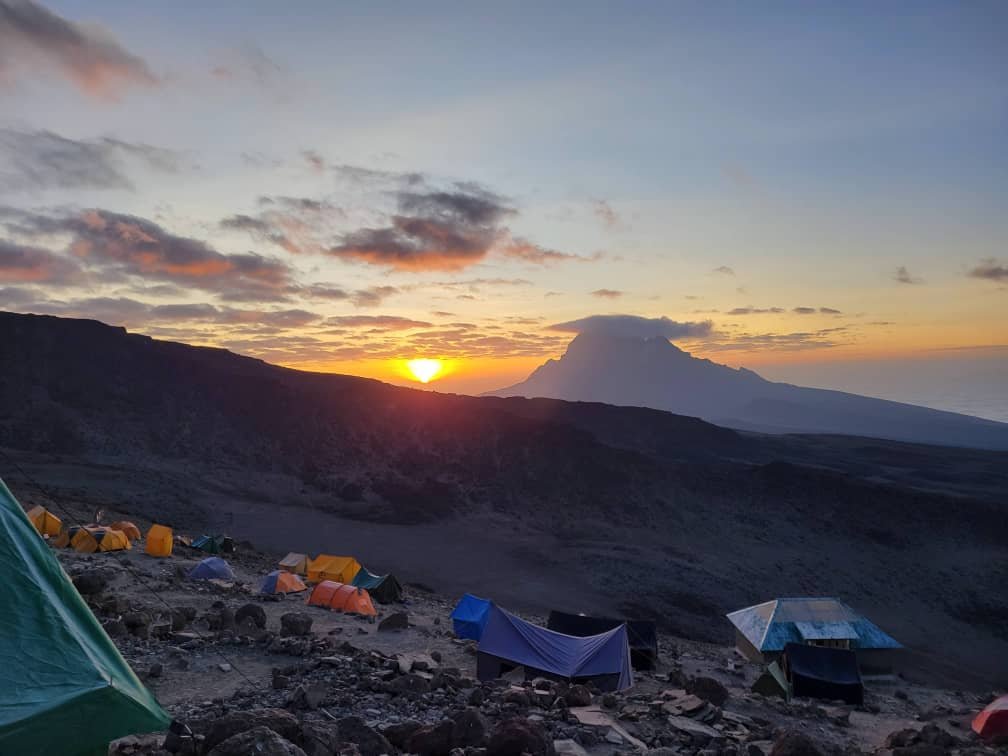
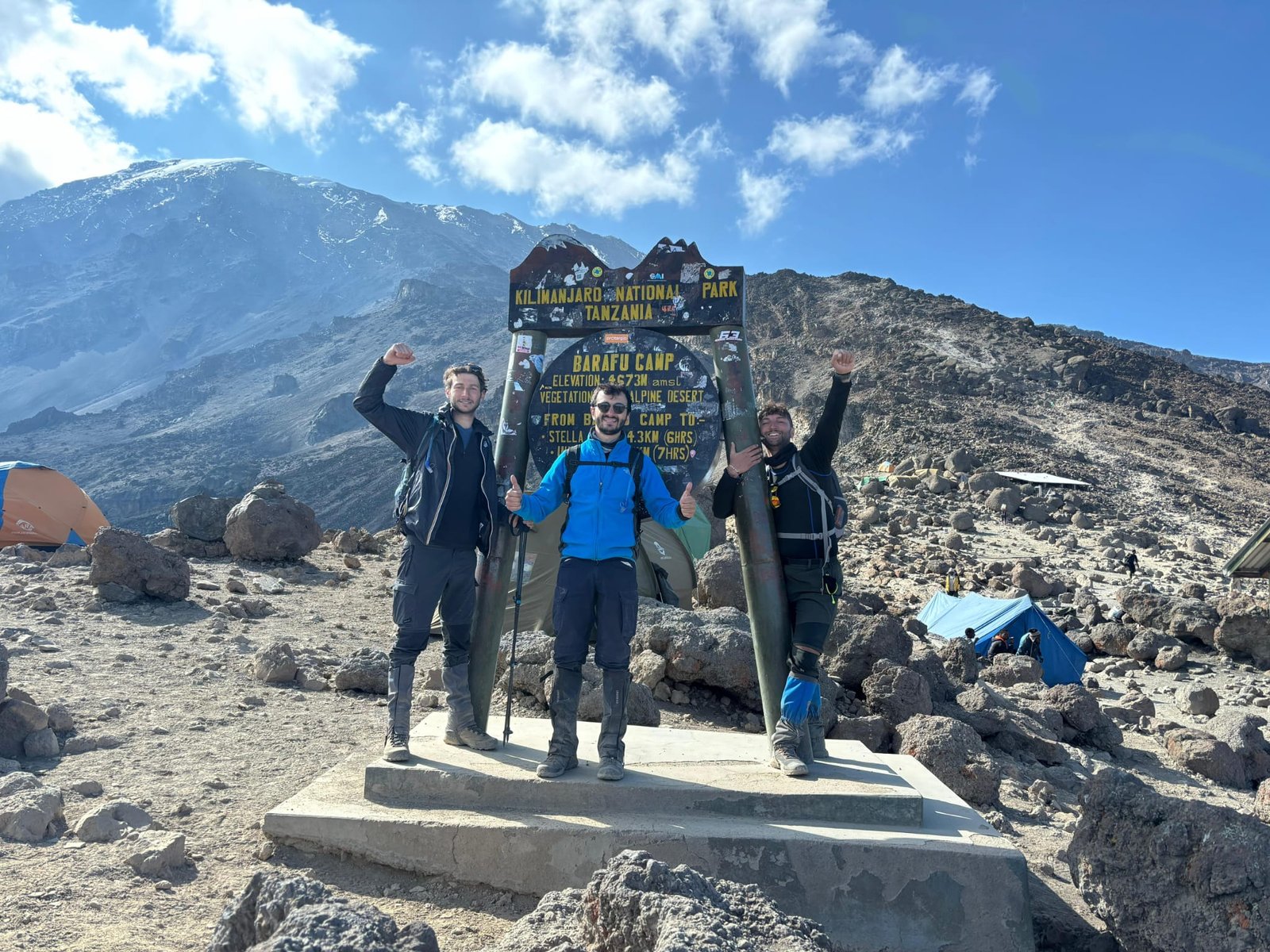
The trail continues to Barafu Camp (4,673m), the final campsite before the summit attempt. The landscape here is rocky, barren, and windswept, with little vegetation due to the harsh climate.
Trekkers arrive at Barafu Camp by mid-afternoon, allowing time to rest, hydrate, and prepare for the summit push.
- Distance: 4 km (2.5 miles)
- Time: 3–4 Hours
- Elevation Gain: 638m (2,093 ft)
- Elevation Loss: 2,175m (7,135 ft)
- Highlights: Alpine Desert
- Accommodation: Barafu Camp (Tents)
- Meals: Breakfast, Lunch & Dinner Included.
Day 6: Barafu Camp (4,673m) to Uhuru Peak (5,895m) to Mweka Camp (3,100m)
The summit attempt begins at midnight. Trekkers ascend through the steep, rocky terrain, making their way to Stella Point (5,756m) on the crater rim. After a short rest, they continue for another hour to reach Uhuru Peak (5,895m), the highest point in Africa.
After celebrating summit success, trekkers begin their long descent to Mweka Camp (3,100m), passing through Barafu Camp for a quick break.
- Distance: 17 km (10.5 miles)
- Time: ~6 Hours
- Elevation Gain: 1,222m (4,009 ft)
- Elevation Loss: 2,795m (9,170 ft)
- Highlights: Arctic (Summit), Moorland (Descent)
- Accommodation: Mweka Camp (Tents)
- Meals: Breakfast, Lunch & Dinner.
Day 7: Mweka Camp (3,100m) to Mweka Gate (1,640m) to Moshi
The final day involves a gentle descent through the rainforest, where hikers may see colobus monkeys and tropical birds.
At Mweka Gate (1,640m), climbers receive their summit certificates before returning to Moshi for a well-earned rest.
- Distance: 10 km (6.2 miles)
- Time: 3–4 Hours
- Elevation Loss: 1,460m (4,790 ft)
- Highlights: Rainforest
- Accommodation: Hotel in Moshi
- Meals: Breakfast & Lunch
Why Choose the Machame Route(7 Days)?
✅ Gradual ascent → Better acclimatization
✅ Diverse scenery → Stunning landscapes
✅ Higher summit success rate
This 7-day Lemosho trek offers a perfect balance of adventure and altitude adaptation, maximizing summit success rates! 🏔️